Mitvim Analysis on Recent Developments regarding the Middle East Peace Process
The Paris peace conference, the John Kerry speech, the UN Security Council resolution, and possible US Mideast policies under Trump
January 2017
In this update:
A. The opportunities of the Paris peace conference, by Dr. Nimrod Goren
B. Assessing Kerry's two-state resurrection endeavor, by Dan Rothem
C. The Jerusalem question in Kerry's peace plan, by Dr. Lior Lehrs
E. Israelis now face a fateful choice as hope for a two-state solution fades, by Dr. Dahlia Scheindlin
F. Possible benefits of American parameters for the two-state solution, A Mitvim policy paper
G. The UN Security Council Resolution on Israeli settlements: Commentaries by Mitvim experts
H. The US elections and the future of the Middle East: Summary of an IPCRI-Mitvim public forum
I. US policies towards Israel and the Middle East 5(1), January 2017
A. The Paris peace conference
1. The opportunities of the Paris peace conference, by Dr. Nimrod Goren
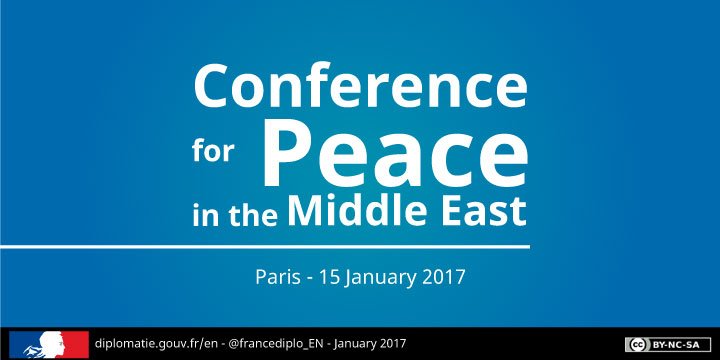
An international conference on Middle East peace will take place in Paris on January 15th, with participation of over 70 countries and international organizations.
Towards the conference, Dr. Nimrod Goren (Head of the Mitvim Institute) identifies the opportunities that the conference entails and that could bring longer-term benefits to peacemaking efforts.
In his article, Dr. Goren criticizes the Israeli government's decision not to take part in the Paris conference, and relates to the need for an international incentive package for peace and for updated international mechanisms to support peacemaking efforts.
You can read Dr. Nimrod Goren's article, published by Ha'aretz, here.
B. The John Kerry speech
1. Assessing Kerry's two-state resurrection endeavor, by Dan Rothem
In his speech on December 28th, US Secretary of State John Kerry introduced six principles for Israeli-Palestinian peace.
They are an imperfect, underwhelming reaffirmation of well-established international consensus regarding a two-state solution. But just like Clinton’s parameters of 2000, Kerry’s principles can outlive their natural political lifespan.
Dan Rothem thoroughly examines how Kerry's principles are linked to past US positions, how they compare with the most advanced knowledge on Israeli-Palestinian final status, and how can they assist future peacemaking efforts.
You can read Dan Rothem's article here.
2. The Jerusalem question in Kerry's peace plan, by Dr. Lior Lehrs
The issue of Jerusalem is at the heart of the Israeli-Palestinian conflict, and it will be impossible to achieve peace without an agreed solution to it.
Dr. Lior Lehrs analyzes three central points in Kerry's peace plan that dealt with the question of Jerusalem
He concludes that Kerry’s plan differs from Netanyahu’s position and incorporates recognition of Jerusalem as the capital of both states, but the ambiguous wording—which avoids delineating the territory in which the Palestinian capital would be established—is expected to arouse opposition amongst the Palestinians.
You can read Dr. Lior Lehrs' artice, published by Matzav, here.
In his speech, Kerry tried to convince Israelis that peace will bring them concrete regional benefits, including normal relations with the Arab world. Prof. Elie Podeh and Dr. Nimrod Goren examine the reigonal aspects of Kerry's speech.
Kerry highlighted the unique opportunity that Israel is currently facing – an opportunity to establish normal ties with Arab countries, and to even launch a joint security framework.
However, he also stressed that fulfilling this opportunity clearly depends on progress towards Israeli-Palestinian peace, contrasting recent claims by Netanyahu that Israeli-Arab normalization can precede Israeli-Palestinian peace.
You can read their article, published by 972 Magazine, here.
4. Israelis now face a fateful choice as hope for a two-state solution fades, by Dr. Dahlia Scheindlin
In his speech, Kerry voiced some uncomfortable truths regarding Israel's policies on the Palestinian issue, which Israelis do not often hear often.
Dr. Dahlia Scheindlin highlights how Kerry displayed surprising knowledge of what occupation means on the ground, and explained why all settlement expansion (including in large blocs adjacent to Israel) is bad for peace.
With these hard and less hackneyed truths, claims Dr. Scheindlin, Kerry may have cracked the bitter shell of some of Netanyahu's own axioms.
You can read Dr. Scheindlin's article, published by The Guardian, here.
5. Possible benefits of American parameters for the two-state solution, A Mitvim policy paper
Prior to the Kerry speech, Mitvim published a policy paper mapping eight benefits of updated American parameters for the two-state solution.
These benefits include: creating continuity along with change, regarding Bill Clinton’s parameters; increasing clarity regarding the final-status agreement; creating a renewed momentum for the two-state solution; making future Israeli-Palestinian negotiations more effective; deepening international involvement in the peace process; igniting separate international engagement with each side to the conflict; sharpening the discourse in Israel regarding the final-status agreement, and; advancing Israel’s quests for recognition.
You can read the policy paper here, and a shortened version by Dr. Nimrod Goren, published by The Jerusalem Post, here.
C. The UN Security Council Resolution
1. The UN Security Council Resolution on Israeli settlements: Commentaries by Mitvim experts
UN Security Council Resolution 2334, adopted on December 23rd, is not the first international decision against the Israeli settlements. It is aligned with previous criticisms voiced against the settlement enterprise and with international efforts to maintain and promote the two-state solution.
Nevertheless, the harsh Israeli response against the resolution, and the meaning attributed to the resolution by major international actors, indicate its potential importance.
This document includes short commentaries by Mitvim experts – Dr. Nimrod Goren, Dr. Ehud Eiran, Rebecca Bornstein, and Dr. Ido Zelkovitz – on various aspects relating to the resolution and its possible ramifications.
You can read the commentaries by Mitvim experts here.
D. Possible US MIdeast policies under Trump
1. The US elections and the future of the Middle East: Summary of an IPCRI-Mitvim public forum
On December 14th 2016, IPCRI and Mitvim hosted a public forum in Jerusalem titled “The US Elections and the Future of Middle East.”
After opening remarks by Dr. Gershon Baskin and Dr. Nimrod Goren, the speakers Dan Rothem, Rebecca Bornstein and Mofid Deak presented their assessments on American foreign policy in the Middle East under the presidency of Donald Trump. The forum was chaired by Suheir Jamil.
You can read the summary of the IPCRI-Mitvim public forum here.
2. US policies towards Israel and the Middle East 5(1), January 2017
"US Policies towards Israel and the Middle East" is a monthly Mitvim report, edited by Rebecca Bornstein.
The January 2017 issue covers the following issues: (A) Israel-US relations - Ambassador Friedman?, cabinet nominations, embassy relocation?, and anti-BDS legislation; (B) The Israeli-Palestinian peace process/conflict - UN Security Council resolution on Israeli settlements, Kerry's speech, and the Paris peace summit;(C) The changing Middle East - Syria, and Yemen/Saudi Arabia; (D) US-Iran relations under a Trump administration.
You can read the January 2017 issue here.
_________________________________
Dr. Nimrod Goren, Head of the Institute
Mitvim - The Israeli Institute for Regional Foreign Policies
11 Tuval St, Ramat Gan 525226, Israel
+972-52-4733613, ngoren@mitvim.org.il, www.mitvim.org.il
Follow us on Facebook and Twitter
Read Mitvim's 2016 Israeli Foreign Policy Index
To support Mitvim, click here